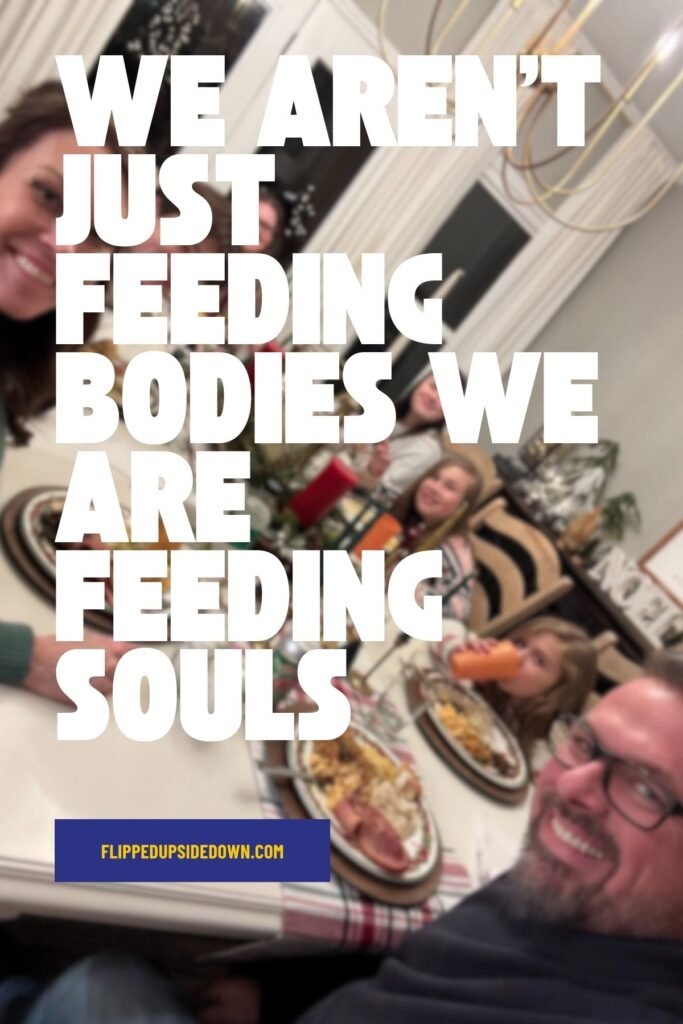

The Family Table
Why Feeding Souls Matters More Than Feeding Bodies
A while back, we were sitting down to eat at the kitchen bar. Food was on our plates. Everyone was technically “there.” But more than half of us were mentally somewhere else. One kid was barely looking up from their phone. Another was eating like it was a NASCAR pit stop so they could get back to their room.
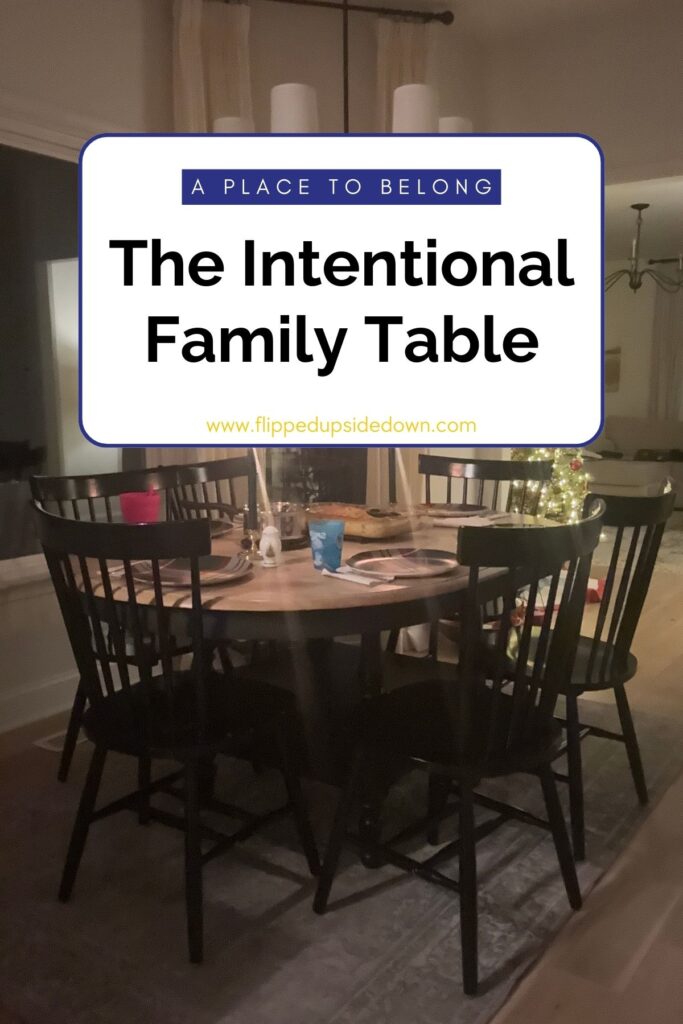
Kasey and I were staring at our food, tired, wondering how it got to be this late. Dinner after 8pm again! No one was fighting. No one was melting down. But no one was really connecting either. And I remember thinking, “Well… this is not what I imagine the family table would look like at this point in our lives.”
We were feeding bodies just fine. Trust me, Kasey is an amazing cook. But something else was missing.
What We Have Reduced the Table To
Somewhere along the way, the family table became a drive-through or fast food at best. Sit down. Eat fast. Get back to life.
We didn’t mean for it to happen. It just kind of did. For us, we used to always eat around our table. Somewhere along the way we got into a bad habit of eating at the kitchen bar. We usually always eat together but something about the bar creates a rushed dinner and no lingering for connection.
Between practices, work, homework, screens, exhaustion, and everything else, dinner slowly turned into something we squeezed in instead of something we gathered around. Most nights, we were all in the same room but living in different worlds. And the quiet lie underneath it all was that as long as everyone eats together, it counts.
But families are built on conversation. On listening. On feeling seen, heard, and safe.
When the table becomes just another task to get through, everything else starts to thin out. Kids stop sharing. Marriages drift into logistics (roommate) mode. Faith becomes something you occasionally talk about instead of something you live out together.
You can have a full table and still feel strangely alone. Let that sink in! We realized we were doing dinner, but we were not really doing family.
The Table Was Always About Formation
Here is the part most of us miss. The family table has never just been about food. It’s always been about formation (or what is being developed on the inside over time).
Every time you sit down together, something is being shaped. Kids are learning if their voice matters. Spouses are practicing how they treat each other. The emotional tone of your home is being quietly set.
None of that requires a big speech. It happens through repetition. Through presence. Through showing up to the same space again and again. And scripture actually understood this long before we did.
Deuteronomy 6 doesn’t talk about passing faith in a classroom. It talks about passing it while you sit down, walk around, lie down, and get up. In other words, in everyday life. In the little mundane moments that seem so insignificant.
The family table is one of the most powerful places where those moments happen. It’s where gratitude is learned. Where prayer becomes natural. Where laughter, frustration, and honesty all have a seat.
You don’t have to be a perfect parent to shape your kids. Wow, thank God! My kids were going to be way out of luck!! lol. You just have to be there. And the family table gives you a place to actually do that.
What Actually Happens at the Family Table
Most of what matters in a family is never said out loud. It’s absorbed. At the table, our kids are quietly answering questions they’ll probably never ask directly.
Do I matter here?
Am I safe to be myself?
Will anyone listen when I talk?
Does my life matter to the people I belong to?
When your child is interrupted, ignored, or brushed off night after night, something starts to form. It’s not a good something, either. When your child is seen, listened to, and invited into conversation, something else forms.
The table becomes our mirror. Not of perfection, but of belonging. The same thing happens in our marriages.
The tone at the table shapes the tone of the home. Respect, irritation, teamwork, or distance all get practiced there, whether we mean to or not.
Even faith becomes real or hollow at the table. Not through long prayers. But through the small ones.
Not through lectures but through gratitude. Not through pressure but through presence.
If we’re willing to slow down as a family, God can have room to move in ordinary moments.
That is why the table matters. Not because it’s spiritual. Because it is formative.
Why the Table Gets Eroded
The family table doesn’t usually disappear because someone decided to destroy it. It slowly starts to erode.
Busyness creeps in. Schedules stack up. Fatigue takes over. Phones slide onto the table. Distraction becomes normal. Nobody sets out to lose connection it just slowly happens. The danger is not necessarily chaos. It’s a silent drift.
Conversations shrink. Kids emotionally retreat. Marriages become about logistics instead of life. I call this living with your roommate. Faith gets pushed to the margins because there is just no space or time left for it.
Not all of this happens at once. But if you pay attnetion it’s enough to feel it.
The Family Table as an Anchor
This is not about turning your family into one of those perfect, matching-outfits, candles-on-the-table, Instagram households. C’mon. That’s not even close to real life. I’m not sure that’s what most common folk like me are interested in.
Real life is loud. Kids are tired. Dinner is sometimes frozen pizza, leftovers, or cereal. We call it a fend-for-yourself night! Someone is often mad about something. That’s just how families work.
The power of the table is not how it looks but how often you come back to it.
Not gourmet meals (unless that’s your thing). Not perfect behavior (this would disqualify our home). Not some nightly performance of togetherness. And not forced conversations because that just gets weird.
What matters is consistency over quality, presence over presentation, and intention over execution. Last night’s table top descended into complete chaos. Good chaos. The important part is that we were all together, at the table, and super connected.
The table becomes an anchor when it is simply where you keep showing up. Even in the middle of the mess. Even when it feels awkward. And especially when it’s totally not magical.
Three Simple Practices We Bring to the Table
We didn’t overhaul our whole dinner routine. We just started bringing three small things into the space.
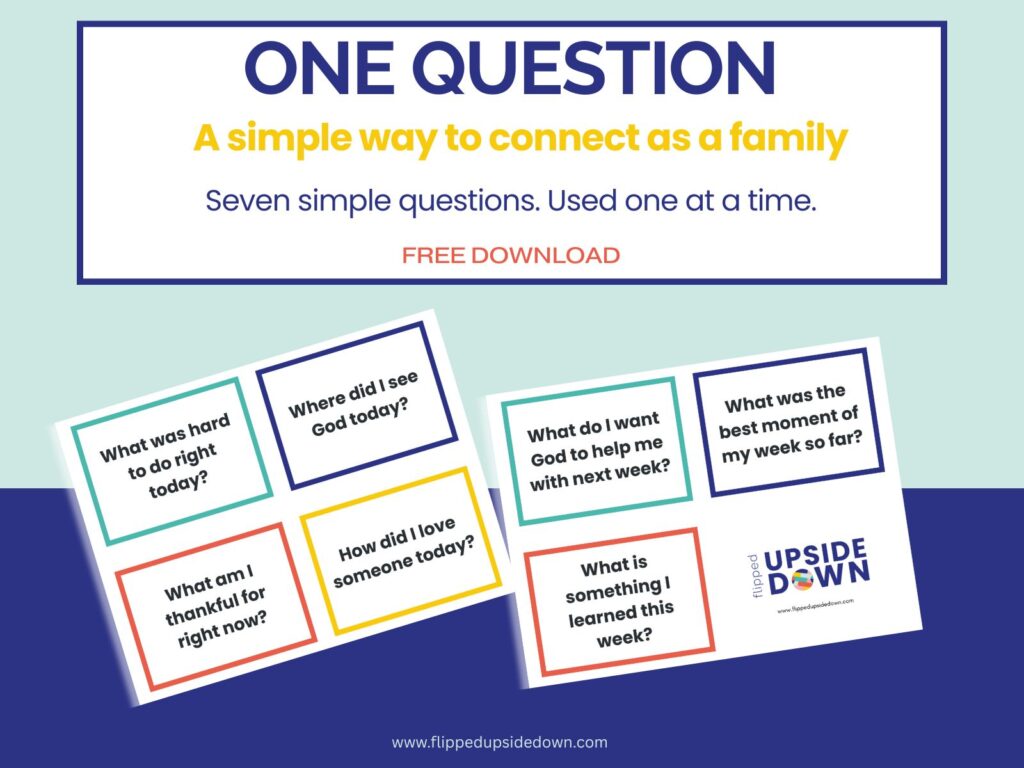
The first is one intentional question. Something simple that invites our kids (2 college and 2 elementary age) to talk instead of just chew. To engage rather than stay in their own world, alone.
The second is that nothing is forced. If the question is just not hitting…don’t force it. Take a step back and just engage your family where they’re at. Our older kids are not afraid to call us out if we try to force something to happen.
The third is prayer. Not long or fancy. Just a moment of gratitude and asking God to be with us.
That’s it. It’s simple. No speeches. No pressure. Just small practices that change the atmosphere of the room.
Download your ONE QUESTION free printable HERE.
Start Where You Are
If you’re thinking, “We don’t do this perfectly,” welcome to the club. Neither do we. But you don’t have to change everything to change something.
You can start with one meal.
One question.
One moment of intention.
We put together a simple one-page printable with 20 family table questions to make this easy to try without overthinking it.
Print it, grab it, bring it to your next meal, and see where it goes.
That’s how this starts. Not with a big promise but with a small intentional interruption.